
In this article, you will learn
- How do packaging for liquid and solid medications differ?
- How do you select a bottle, container, or blister pack for a specific dosage form?
- What should be considered regarding seal integrity, dispensing, and product protection?
Packaging for liquid medicines – what to look for?
Liquid medicines require packaging that is resistant to leakage, evaporation, and contact with external agents. This applies to syrups, drops, solutions, tinctures, suspensions, and preparations for external use.
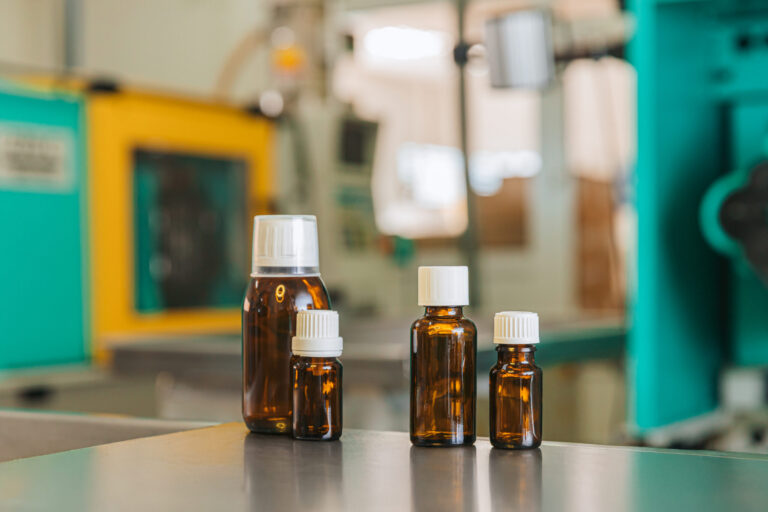
Glass or plastic bottles are most commonly used. The choice of material depends on the formulation's composition, its sensitivity to light, and the method of application.
Bottles for syrups, solutions, and suspensions
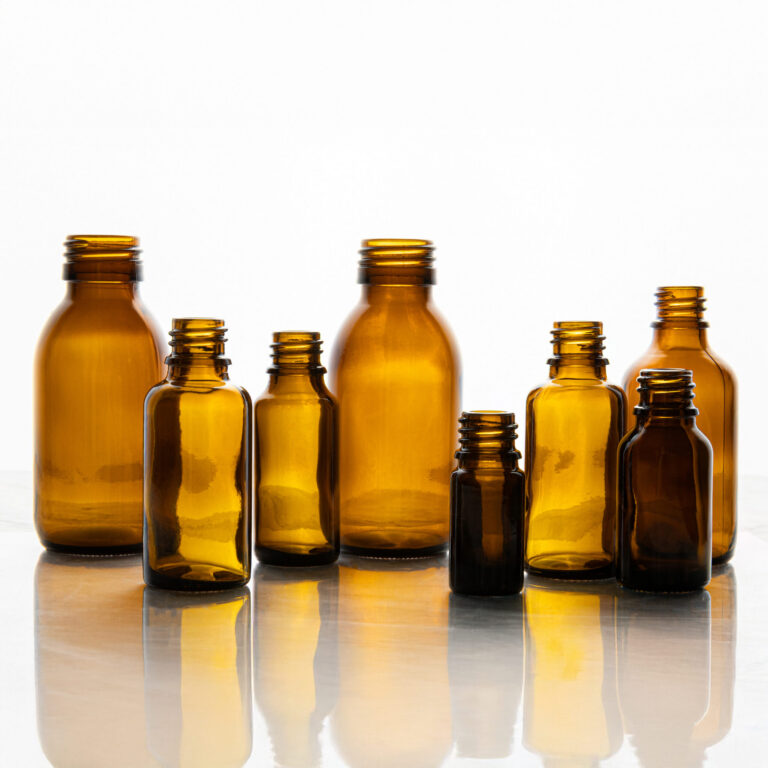
Syrups and solutions are typically packaged in larger bottles. In practice, capacities of 100 ml, 150 ml, 200 ml, 250 ml, or 500 ml are used. For such products, ease of pouring and the compatibility of the closure with a measuring cup, small glass, or dispenser are key factors.
Suspensions and emulsions may require a wider opening. This facilitates application and minimizes the problem of the product accumulating at the bottle neck.
Small bottles for drops and concentrates
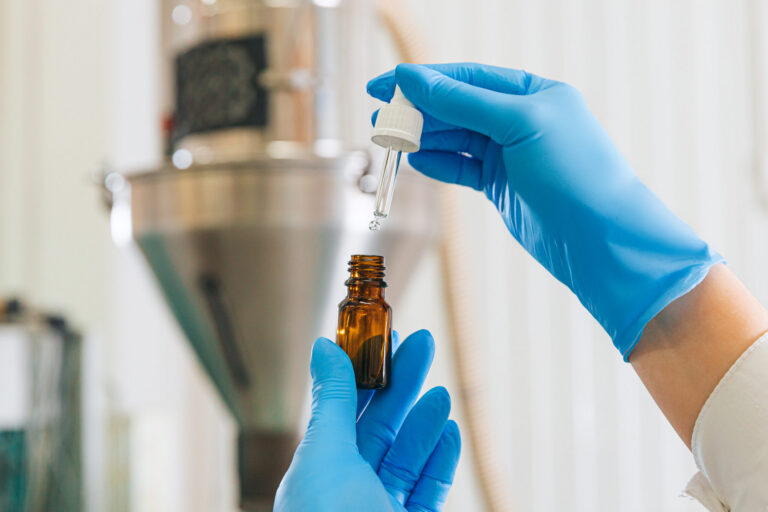
Drops require smaller container capacities and precise dosing. In such cases, 5 ml, 10 ml, 15 ml, 20 ml, or 30 ml bottles are used. The choice of dropper, pipette, or flow restrictor is also important.
The bottle, thread, and closure must work together. Even a well-chosen material is not enough if the dispensing system does not deliver the product consistently.
Packaging for solid medicines – tablets, capsules, and powders
Solid medications have different requirements. They do not need protection against leakage, but a barrier against moisture, mechanical damage, and air exposure is more important.
This group includes tablets, capsules, granules, and powders. Each of these forms requires a different approach to packaging.
Blister packs for tablets and capsules
A blister pack protects individual doses of medication. Each tablet or capsule is housed in a separate compartment, limiting exposure to the environment until the moment of use. This is a practical solution for medications taken regularly.
Blister packs are also effective for dosage control. The user can see how many doses remain in the package. For the manufacturer, the ability to include markings such as the batch number and expiration date is important.
Containers and bottles for capsules and tablets
Tablets and capsules can also be packaged in plastic containers or bottles. This method is used for larger numbers of doses per package.
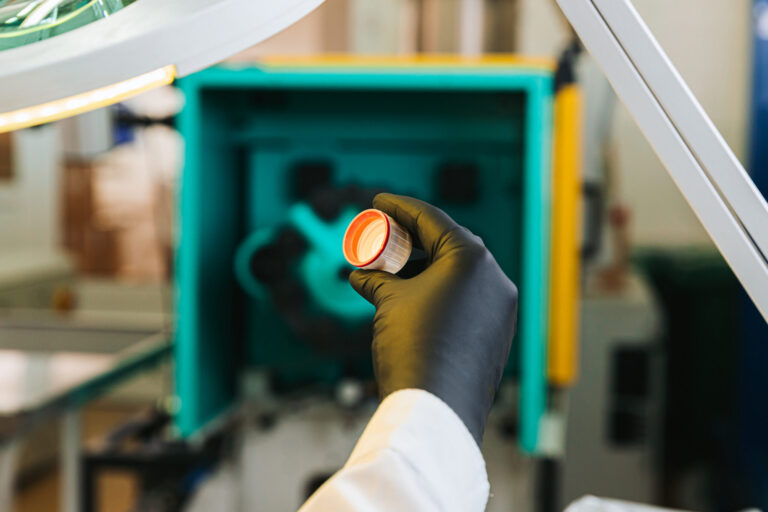
In this category, the tightness of the seal is important. Sealing liners, closures with tamper-evident rings, or CRC (child-resistant) mechanisms—which prevent accidental opening by children—are frequently used.
Packaging material and dosage form
The material is selected based on the formulation of the product and the storage conditions. Glass, PET, HDPE, PP, and aluminum serve different functions. Not every material is suitable for every medication.
Glass is used for products requiring chemical neutrality. It does not react with the contents or alter their properties. The amber version limits light exposure, making it suitable for drops, tinctures, and light-sensitive solutions.
Plastics are lightweight and resistant to damage. They are used for syrups, supplements, tablets, and capsules, as well as for products that must withstand the rigors of transport. For solid medications, plastic can form a container with a screw cap; for liquid medications, it serves as a bottle that must be compatible with the chosen closure and dispensing system.
Packaging tightness, dispensing, and safety
Pharmaceutical packaging does not function in isolation; it forms a system comprising the closure, dispenser, label, and markings. Different elements of this system come to the fore depending on whether the medication is liquid or solid.
With liquid medications, controlling the dosage is of primary importance. Depending on the product, pipettes, droppers, measuring cups, measuring spoons, atomizers, or flow restrictors are used. The choice depends on the method of administration. Drops require precision. Syrups require convenient measurement. Topical preparations may require an atomizer or an applicator.
For solid dosage forms, protecting individual doses and limiting exposure to moisture are important. Blister packaging secures each tablet separately. Bulk containers require a tight-fitting cap and a suitable material.
In both cases, markings are important. The batch number, expiration date, and storage information help track the product in the supply chain.
How do you choose packaging for a specific dosage form?
Packaging selection begins with the product. Factors such as its form, composition, method of use, and resistance to light or moisture are what matter.
- liquid medications require a tight bottle and a well-selected dosing system,
- the drops require a small capacity and a dropper or pipette,
- It is best to mix syrups with a measuring cup, glass or cap with a safety catch,
- tablets and capsules require protection against moisture and damage,
- Blister packs are suitable for applications where control over individual doses is important.
There is no single type of packaging suitable for all dosage forms. The same material may work well for one product but prove unsuitable for another.
Packaging for liquid and solid medications – what is worth remembering?
Liquid medications require airtight, leak-proof packaging compatible with the dispensing system. Solid medications require protection against moisture, damage, and exposure to air.
The most important difference lies in the method of administration. A liquid must be carefully measured and administered, whereas a tablet or capsule requires protection until the moment of use. Therefore, the packaging should be determined by the form of the medication, rather than solely by capacity or price.
ABA Poland supplies packaging tailored to liquid and solid medications, including glass and plastic bottles, caps, droppers, pipettes, dosing cups, and measuring spoons. The product range includes solutions for compounding pharmacies, pharmaceutical manufacturers, and companies handling large-scale production runs. Component selection is based on the drug's form, the method of administration, and quality requirements.