
In this article, you will learn
- what preparations is it suitable for glass bottle with dropper?
- what is the difference between small bottles with a dropper from larger packages?
- how to choose the capacity, glass and dropper for a liquid medicine?
Dropper bottle – when does it make sense?
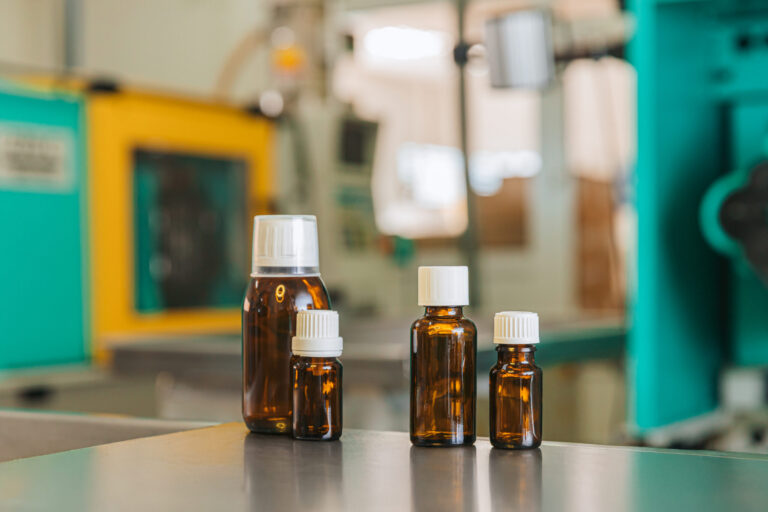
Dropper bottle this is useful when the preparation is to be administered in a small amount. A dropper restricts the flow of liquid and helps to dose the product gradually. This is important for medicines that should not be poured directly from the bottle.
This most frequently applies to liquid preparations with low or medium viscosity. A product that is too thick may not pass through the dropper properly. One that is too runny may flow out too quickly if the opening is not well-matched.
Compounded drops and solutions
Small bottles with a dropper used for drops, tinctures and solutions prepared in the compounding pharmacy. In such products, control of the amount of the administered preparation is important.
The dropper should be matched to the viscosity of the liquid. A thin aqueous solution requires a different solution than an alcohol- or oil-based preparation.
Spot treatments
A dropper bottle works well for topically applied products. This may apply to selected skin preparations, care liquids, oils or concentrates.
Precision matters in such applications. The user dispenses only as much liquid as they need in a given spot.
Glass bottle with dropper versus storage safety
Glass bottle with dropper it is chosen when the product requires a stable packaging material. Glass does not change the smell of the product, does not stain easily and does not react with most typical formulations. In pharmacy, this is important for liquid medicines, tinctures, drops and substances that should be stored in packaging that is as neutral as possible.
What medicines and preparations can be stored in a dropper bottle?
It is worth storing preparations in a dropper bottle if they are intended for drop-by-drop or gradual administration. This applies to products prepared for this method of application.
Pharmaceutical drops
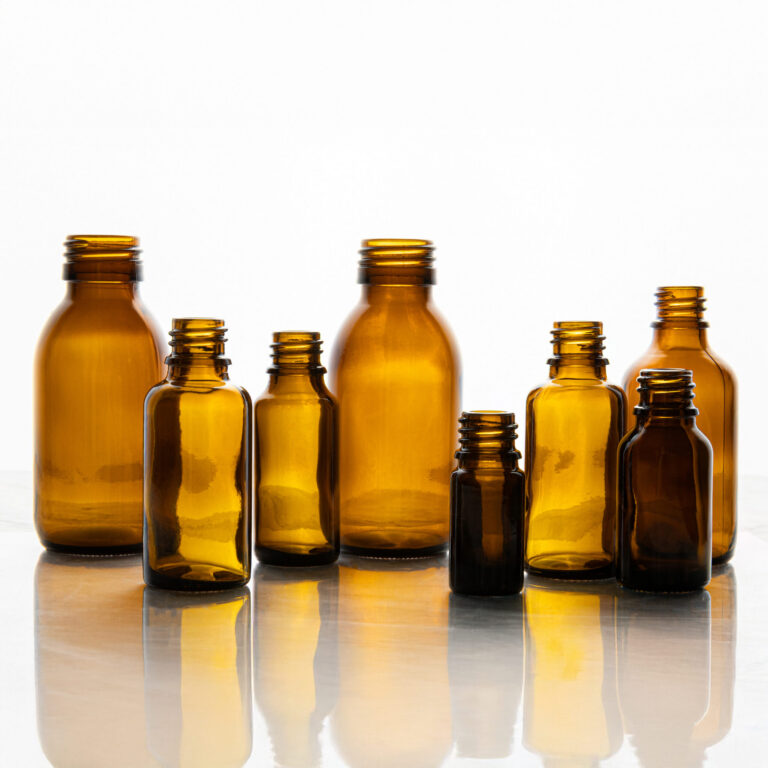
Drops require a small capacity and precise dosing. Most commonly, 5 ml, 10 ml, 15 ml, 20 ml, 30 ml or 50 ml bottles are used. In this group, the compatibility of the bottle with the dropper and the cap is important.
An incorrectly chosen dropper can dispense too large or too small a portion of liquid. Therefore, the whole system matters, not just the hole in the cap.
Tinctures and solutions
Tinctures and compounded solutions often require controlled administration. A dropper bottle limits the risk of spillage and makes it easier to apply a small amount of liquid.
With alcohol- or oil-based preparations, material compatibility is important. The glass, cap and dropper should be suitable for the product’s composition.
Oils and concentrates
Oils, concentrates and serums can be packaged in dropper bottles if they require targeted application. In such products, hygiene and limiting contact between the contents and the hand are what matter.
With thicker liquids, you need to check whether the dropper will work properly. Not every preparation flows well through a small opening.
Small bottle for drops, larger one for solutions
Smaller capacities work best for drop dosing. A 10 ml, 20 ml or 30 ml bottle is convenient to use and easier to control during application.
A larger bottle, e.g. 100 ml or 200 ml, makes sense when the product is not administered drop by drop, but requires controlled pouring or measuring out a larger portion.
Types of dropper used in bottles
A drip counter is not a single universal component. Different designs are responsible for different ways the liquid flows out.
edge dripper
An edge dropper delivers liquid at the edge of an opening. It is used with many liquid preparations where control of single drops is required.
In practice, various variants of such droppers are encountered, selected to suit the bottle and the properties of the liquid.
Vertical dropper
The vertical dropper directs the flow along the axis of the bottle. It can be used for preparations that require a more predictable direction of administration.
Such a solution is chosen to suit the application of the product and the way the user is intended to use the packaging.
Multi-channel pipette
A multichannel drip tip can improve flow control with selected liquids. It works well where a standard orifice does not deliver the expected dispensing performance.
The choice of dropper should take into account viscosity, surface tension and the expected drop size.
What should be kept in mind when storing medicines in a dropper bottle?
Not every medicine can be independently poured into another bottle. Ready-made medicinal products should be stored in accordance with the manufacturer's information or the pharmacist's recommendation. Changing the packaging may affect stability, labelling and safety of use.
A dropper bottle only makes sense when it is part of a planned packaging system. This applies to manufacturing, pharmacy dispensing, packaging or preparations prepared for this form of administration.
- the preparation should be compatible with the material of the bottle and dropper,
- the packaging must be airtight,
- the drop counter should dispense liquid in a repeatable manner,
- the label must include the name, dosage, date and storage conditions,
- Ready-made medicines should not be repackaged without justification and control.
Dropper bottle manufacturer – ABA Poland solutions
ABA Poland offers bottles with a dropper and components for precise fluid dispensing. The range includes glass bottles and solutions tailored for edge, vertical, and multi-channel dropper inserts. Packaging selection covers capacity, glass colour, thread, dropper type, and leak-tightness requirements.